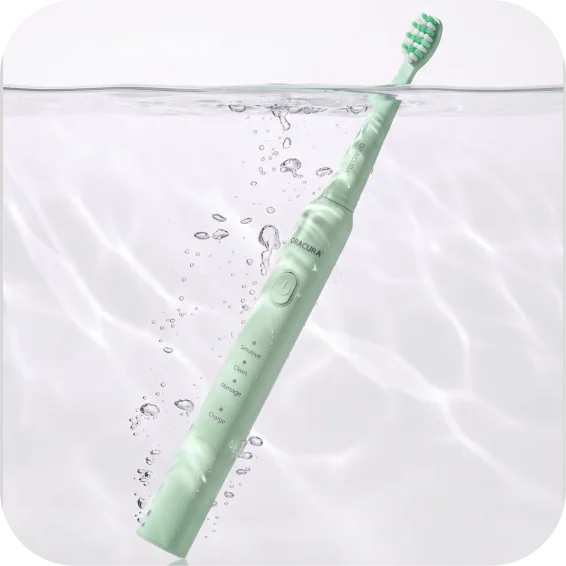
The humble toothbrush has quietly evolved from a simple stick with bristles into a sophisticated tool backed by decades of dental science. Today, millions are making the switch from manual brushing to advanced electric models and for good reason. Industry analyses show the global electric toothbrush market reached approximately USD 4.36 billion in 2024, reflecting growing consumer recognition that small changes in daily habits can deliver outsized improvements in oral health.
Picture your morning routine transformed: instead of hastily scrubbing for thirty seconds, a gentle but powerful device guides you through a full, systematic clean. Timers keep you on track, pressure sensors protect your gums and in many cases an app even shows you exactly where you've missed. What begins as a modest upgrade often becomes the single most effective change people make to their dental care regimen.
Despite daily brushing, plaque and gum issues silently threaten your smile and confidence. Oracura's dentist-trusted water flossers and sonic toothbrushes offer gentle, deep cleaning crafted for Indian homes. Paired with natural toothpaste, they ensure lasting oral health. Join 200,000+ happy users and transform your dental care for healthier teeth and gums. Shop Now!
Superior Plaque Removal Backed by Evidence
Time and again, independent clinical studies demonstrate that electric toothbrushes remove significantly more plaque than manual brushing. Reductions of up to 21 percent are commonly reported an amount that compounds over months and years into noticeably healthier teeth and gums.
The secret lies in the mechanical action. Whether employing oscillating-rotating technology or high-frequency sonic vibrations, these brushes generate thousands of strokes per minute, a pace no human hand can match. This rapid, controlled movement dislodges food particles, biofilm and plaque from surfaces and hard-to-reach areas that conventional brushing frequently overlooks.
Modern designs further tilt the odds in your favor. Built-in two-minute timers with quadrant pacing ensure balanced coverage across all areas of the mouth. Pressure sensors vibrate or pause when you bear down too hard, helping prevent the gum abrasion and enamel wear that aggressive manual brushing can cause.
Meaningful Protection for Gums Over the Long Term
Gum health often tells the real story of brushing technique. Millions experience recession, bleeding, or early periodontal problems largely because of inconsistent pressure or improper motion. Electric models help counteract these patterns by promoting gentler, more uniform cleaning.
Controlled, back-and-forth-free movement reduces the mechanical stress that gradually wears down delicate gum tissue. For people already dealing with sensitivity or early signs of gingivitis, the difference frequently becomes apparent at the next dental visit: less inflammation, improved pocket depths and gums that bleed less readily.
Dental professionals regularly observe better long-term compliance among patients who switch. When the tool itself nudges you toward correct technique, maintaining good habits requires far less conscious effort.
From Basic Power to Intelligent, Personalized Care
Today's premium electric toothbrushes do far more than vibrate. Bluetooth connectivity turns brushing into a data-informed ritual. Companion apps map your coverage in real time, highlight neglected zones and track progress across weeks or months.
Multiple brushing modes sensitive, deep clean, gum massage, whitening let you adapt the experience to your specific needs on any given day. Artificial intelligence in some models learns your habits and offers tailored suggestions, making preventive care feel surprisingly personalized.
For individuals already immersed in wearable health technology, this integration feels natural. Oral hygiene joins sleep tracking, step counting and heart-rate monitoring as another measurable dimension of wellness.
Groups That Tend to See the Biggest Advantages
While almost anyone can benefit, certain individuals often experience particularly noticeable improvements:
- Older adults and people with arthritis or reduced hand mobility find the powered motion eliminates much of the physical effort required for thorough cleaning.
- Parents frequently report that children brush longer and more effectively when the novelty and built-in timers make the task engaging rather than chore-like.
- Those who struggle with recurring plaque buildup or early gum disease often see faster progress at recall appointments after consistent electric-brush use.
- Time-pressed professionals and frequent travelers appreciate how quadrant timers enforce discipline even on rushed mornings or in hotel bathrooms.
Even accomplished manual brushers typically discover incremental gains cleaner interdental spaces, smoother tooth surfaces and greater confidence heading into checkups.
Realistic Considerations Around Cost and Convenience
Yes, the upfront price exceeds that of manual brushes. Yet many rechargeable models prove durable over several years, with replaceable heads that cost only slightly more than premium manual brushes over time.
Better plaque control frequently translates into fewer restorative treatments and less need for intensive professional cleanings an economic benefit that becomes clearer over a five- or ten-year horizon. Subscription programs for brush heads remove the hassle of remembering to reorder, while long battery life and compact travel chargers make daily use practical almost anywhere.
Answering Common Doubts and Setting Realistic Expectations
Some wonder whether the benefits truly justify the expense and adjustment period. The answer depends partly on consistency: manual brushing performed with near-perfect technique can be effective, but large-scale studies show most people fall short of ideal habits day after day. Electric models help close that everyday performance gap.
They complement not replace flossing, interdental cleaning and regular dental visits. The first week or two can feel strange; the vibration is more intense than expected. Almost everyone adapts quickly and the majority report preferring the sensation once the learning curve flattens.
A Quiet Upgrade That Compounds Over Years
Switching to an advanced electric toothbrush rarely feels dramatic in the moment. There is no overnight miracle. Instead, the payoff arrives gradually: fewer bleeding points at cleanings, smoother-feeling teeth, greater confidence in social settings and a subtle but persistent reduction in dental surprises. Electric Toothbrush Market Size: The global electric toothbrush market size reached USD 3.4 Billion in 2024. Looking forward, IMARC Group expects the market to reach USD 4.9 Billion by 2033, exhibiting a growth rate(CAGR) of 3.86% during 2025-2033.
As scientific understanding deepens the connection between oral health and whole-body wellness from cardiovascular risks to metabolic health the case for investing in better daily tools grows stronger. For many, that investment begins with replacing an ordinary manual brush with one that quietly, consistently does more of the work for you.
If your current routine leaves even modest room for improvement, this small shift may prove one of the highest-return health decisions you make in the course of a year.
Frequently Asked Questions
Are electric toothbrushes worth the higher upfront cost?
While electric toothbrushes do cost more initially, many rechargeable models last several years with only brush head replacements needed over time. Better plaque control often means fewer cavities, less gum disease, and reduced need for costly dental treatments making them a strong long-term investment. Subscription programs for replacement heads also make ongoing maintenance convenient and affordable.
Who benefits most from switching to an electric toothbrush?
Almost anyone can benefit, but certain groups see the most dramatic improvements: older adults or those with limited hand mobility, children who need encouragement to brush longer, and people prone to plaque buildup or early gum disease. Even skilled manual brushers typically notice cleaner interdental spaces and smoother tooth surfaces after making the switch.
Are electric toothbrushes actually better than manual brushes for removing plaque?
Yes, clinical studies consistently show that electric toothbrushes remove significantly more plaque than manual brushing with reductions of up to 21% commonly reported. This is due to their oscillating-rotating or sonic technology, which generates thousands of strokes per minute, a pace no human hand can replicate. Over months and years, this improvement compounds into noticeably healthier teeth and gums.
Disclaimer: The above helpful resources content contains personal opinions and experiences. The information provided is for general knowledge and does not constitute professional advice.
You may also be interested in: Electric vs. Manual Toothbrush: Which Is Best for Your Oral Health?
Despite daily brushing, plaque and gum issues silently threaten your smile and confidence. Oracura's dentist-trusted water flossers and sonic toothbrushes offer gentle, deep cleaning crafted for Indian homes. Paired with natural toothpaste, they ensure lasting oral health. Join 200,000+ happy users and transform your dental care for healthier teeth and gums. Shop Now!
Powered by flareAI.co