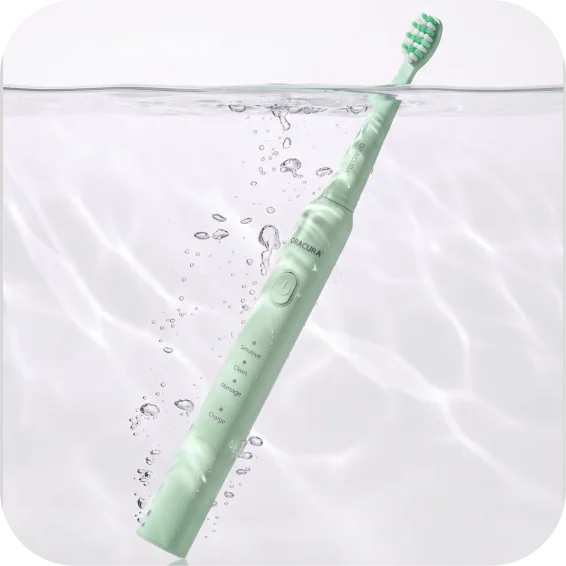
Imagine standing at your bathroom sink as a soft, steady hum fills the air. The toothbrush in your hand moves with a precision and speed no manual brushing could ever match. What began decades ago as a novel convenience has become one of the most scientifically sophisticated tools in daily personal care. Sonic toothbrush technology delivers more than vibration it harnesses fluid dynamics and high-frequency physics to achieve cleaning results that reach deeper and work more effectively than bristles alone ever could.
Today millions rely on these devices not because of clever advertising, but because independent studies and everyday experience consistently show superior plaque removal, gentler gum care and noticeably fresher breath. The question is no longer whether sonic brushing works better than manual brushing; the evidence is clear. The real story lies in understanding exactly how sonic toothbrush technology achieves those results through carefully engineered physics.
Despite daily brushing, plaque and gum issues silently threaten your smile and confidence. Oracura's dentist-trusted water flossers and sonic toothbrushes offer gentle, deep cleaning crafted for Indian homes. Paired with natural toothpaste, they ensure lasting oral health. Join 200,000+ happy users and transform your dental care for healthier teeth and gums. Shop Now!
Defining Sonic Toothbrush Technology
The term “sonic” refers to the extremely high-frequency side-to-side oscillations produced by the brush head. Leading models generate between 20,000 and 62,000 brush movements per minute equivalent to hundreds or even thousands of strokes every single second. This is orders of magnitude faster than the several hundred strokes per minute most people achieve with a manual toothbrush.
Inside the handle, a small but powerful motor converts electrical energy into mechanical motion at ultrasonic-like frequencies. The rectangular brush head familiar from traditional designs sweeps rapidly from side to side rather than rotating in circles. That seemingly simple difference unlocks an entirely different cleaning mechanism.
Fluid Dynamics: The Hidden Cleaning Power
At such speeds, the bristles do far more than scrub surfaces. They whip the thin layer of saliva, toothpaste and water surrounding the teeth into vigorous motion. This creates turbulent micro-currents and cavitation: the rapid formation and collapse of countless microscopic bubbles. Each collapse releases localized shock waves that help dislodge plaque, disrupt bacterial biofilms and flush debris from hard-to-reach areas.
Peer-reviewed research has demonstrated that this hydrodynamic effect extends effective cleaning up to four millimeters beyond the point of bristle contact. Interproximal spaces, the gumline and even shallow subgingival pockets benefit from forces that never physically touch those surfaces. The cleaning action becomes three-dimensional rather than strictly mechanical.
Sonic vs. Rotating-Oscillating: A Clear Mechanical Contrast
Electric toothbrushes fall into two primary categories. Rotating-oscillating models feature a small round head that spins back and forth, typically delivering 7,500–8,800 movements per minute. They excel at physically sweeping plaque from flat surfaces through direct abrasion.
Sonic brushes take a different approach. Their linear, high-frequency motion generates both mechanical scrubbing and the secondary fluid-cleaning phenomenon described earlier. The larger, rectangular head shape feels intuitive for users transitioning from manual brushes, while the fluid dynamics provide cleaning assistance in areas the bristles cannot directly reach.
- Extended reach fluid action cleans between teeth and below the gumline more effectively
- Higher velocity dramatically more brush movements per minute in the same two-minute session
- Smoother sensation a gentle, uniform vibration instead of distinct rotational pulses
Frequency, Amplitude and Biofilm Disruption
Many sonic models operate near 31,000 strokes per minute, though flagship devices now exceed 40,000 or even 60,000. At these rates, bristles generate powerful shear forces capable of fracturing the sticky extracellular matrix that protects bacterial communities (biofilm) on tooth surfaces.
Amplitude the distance each bristle tip travels also matters. Carefully calibrated amplitude ensures effective cleaning without excessive pressure that could irritate gums. Clinical measurements frequently show significant reductions in plaque indices and gingivitis scores after subjects switch to sonic brushing, often even when brushing technique remains largely unchanged.
Documented Clinical and Everyday Benefits
Beyond plaque and gingivitis reduction, the rapid vibration appears to produce mild stimulatory effects on gingival tissues. Some investigations report modest improvements in microcirculation and connective tissue health, though the dominant advantage remains mechanical and hydrodynamic plaque control.
People wearing orthodontic appliances, dental implants, crowns, or bridges frequently report easier and more thorough cleaning. Those with sensitive gums often find the high-frequency, low-pressure action noticeably gentler than aggressive manual scrubbing. Built-in two-minute timers and pressure sensors further promote consistent, correct technique small features that compound into meaningful long-term oral health gains.
Market Trends Mirror Genuine Consumer Demand
Rising global awareness of preventive oral care continues to drive interest in advanced home hygiene tools. According to industry analysis, the worldwide dental hygiene devices market was valued at USD 4.75 billion in 2024, with North America maintaining a leading position. The steady expansion reflects millions of people choosing technology that makes daily prevention simpler and more effective.
This growth stems less from marketing hype than from real-world results: cleaner teeth, healthier gums and the confidence that comes from using a device backed by decades of engineering refinement and clinical validation.
Answering Persistent Questions and Dispelling Myths
One common concern is whether such high speeds might damage enamel or irritate gums. Multiple long-term studies indicate the opposite: properly used sonic brushes produce less dentin abrasion than forceful manual brushing. Modern designs incorporate pressure sensors precisely to prevent overzealous technique.
Another frequent question involves noise. Early sonic models earned a reputation for being loud; contemporary versions run far quieter, producing a smooth, low hum that many users find oddly soothing rather than intrusive.
Replacement-head frequency also comes up regularly. The standard recommendation remains every three months identical to manual brushes to ensure bristles remain effective and hygienic.
Looking Ahead: The Next Chapter in Sonic Innovation
Ongoing engineering advances include magnetic-drive systems that reduce mechanical friction, extend battery life and further quiet operation while preserving or even increasing oscillation frequency. App-connected models now provide real-time brushing pattern analysis, zone-by-zone coverage feedback and personalized coaching moving oral care toward truly individualized prevention.
Yet the fundamental insight remains elegantly simple: rapid vibration, intelligently applied, combines with the natural fluid environment of the mouth to achieve cleaning results once possible only in a professional setting. That combination of sophisticated science and everyday practicality explains why sonic technology continues to earn the trust of both consumers and dental professionals alike.
Next time the familiar hum starts, recognize what you're really hearing: decades of materials science, fluid mechanics and clinical research working together in a tool small enough to fit in your hand. In an age of constant complexity, there is something quietly reassuring about a device that turns two minutes twice a day into one of the most effective health investments you can make.
Frequently Asked Questions
How does sonic toothbrush technology actually clean teeth?
Sonic toothbrushes generate between 20,000 and 62,000 brush movements per minute, creating high-frequency vibrations that whip the surrounding saliva, toothpaste and water into turbulent micro-currents. This process known as cavitation produces microscopic bubbles that collapse and release localized shock waves, dislodging plaque and disrupting bacterial biofilms. Crucially, this hydrodynamic effect extends cleaning up to 4mm beyond where the bristles physically touch, reaching interproximal spaces and the gumline.
Is a sonic toothbrush better than a rotating-oscillating electric toothbrush?
Both types outperform manual brushing, but they work differently. Rotating-oscillating brushes use a small round head spinning at 7,500–8,800 movements per minute to physically sweep plaque from surfaces. Sonic toothbrushes combine direct mechanical scrubbing with a secondary fluid-cleaning effect at far higher frequencies, offering extended reach between teeth, a smoother sensation and more brush movements per session making them particularly effective for those with orthodontic appliances, implants, or sensitive gums.
Can sonic toothbrushes damage enamel or gums with such high speeds?
Despite their high frequencies, multiple long-term studies show that properly used sonic toothbrushes actually produce *less* dentin abrasion than forceful manual brushing. Modern sonic models include built-in pressure sensors to prevent overly aggressive technique and their carefully calibrated amplitude ensures effective cleaning without irritating gum tissue. Clinical research consistently shows reductions in both plaque indices and gingivitis scores among users who switch to sonic brushing.
Disclaimer: The above helpful resources content contains personal opinions and experiences. The information provided is for general knowledge and does not constitute professional advice.
You may also be interested in: The Science Behind Smart Toothbrushes: How Technology is
Despite daily brushing, plaque and gum issues silently threaten your smile and confidence. Oracura's dentist-trusted water flossers and sonic toothbrushes offer gentle, deep cleaning crafted for Indian homes. Paired with natural toothpaste, they ensure lasting oral health. Join 200,000+ happy users and transform your dental care for healthier teeth and gums. Shop Now!
Powered by flareAI.co