Ever run your tongue over your teeth right after brushing… and something just feels off? Not exactly dirty, but not clean either. Like you missed a spot, but you can’t tell where.
That feeling isn’t in your head. It’s your mouth telling you your routine is only doing half the job.
Most of us grow up believing brushing results in clean teeth. Twice a day, two minutes, done. But your mouth isn’t a flat surface you can “wipe clean.” It’s full of tight spaces, soft tissues, and hidden corners where bacteria quietly settle in, and brushing alone doesn’t reach most of them.
Let’s break down why that “not-so-clean” feeling sticks around.
You’re Cleaning the Obvious, Not the Hidden
A toothbrush, especially a manual one, mainly works on the front and top surfaces of your teeth. But plaque doesn’t politely stay there. It builds up between teeth and just under the gumline, areas your brush barely touches.
In fact, dental studies have consistently shown that a significant portion of plaque lives between teeth. So even after a thorough brush, a large part of your mouth remains untouched. That’s why your teeth can look clean in the mirror but still feel slightly coated.
Your Technique Might Be Working Against You
Brushing harder doesn’t mean brushing better. In fact, aggressive brushing can miss plaque while also irritating your gums. Most people rush through it, skim the gumline, and call it a day.
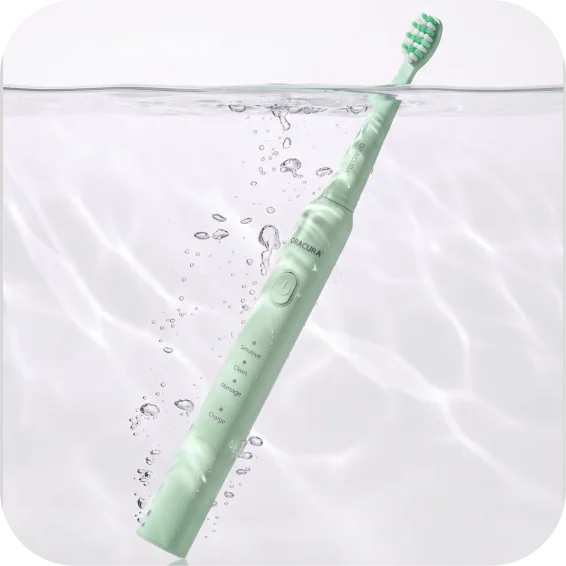
Electric toothbrushes, on the other hand, are designed to maintain consistent motion and reach areas people usually miss. It’s not about doing more, it’s about doing it right.
There’s a Whole Bacterial Layer You’re Ignoring
Here’s something most people don’t realize: your tongue holds a huge amount of bacteria. And every time you finish brushing without cleaning it, that bacteria stays behind,and spreads again.
Now imagine this: you’ve just cleaned your teeth, but your tongue still carries odor-causing and plaque-forming bacteria. Within hours, that “fresh” feeling fades.
Your Toothpaste Might Be Too Harsh, or Not Effective Enough
Some toothpastes rely on strong abrasives to give that squeaky-clean feel. Others barely support your mouth’s natural balance. Either way, the result can be the same: your teeth don’t feel clean for long.
A good toothpaste should clean without stripping your enamel or irritating your gums, because a healthy mouth maintains its own balance better.
The Missing Step No One Talks About Enough
If your routine is just brush-and-rinse, you’re skipping one of the most important steps: cleaning between your teeth.
That’s where a water flosser comes in. It uses targeted pressure to flush out debris and bacteria from areas your brush can’t reach, especially along the gumline. And if it comes with a tongue-cleaning tip, it quietly solves that lingering freshness problem most people ignore.
So Why Do Your Teeth Still Feel Dirty?
Because your routine is incomplete, not wrong, just incomplete.
You’re doing the visible part well. But real oral hygiene happens in the places you don’t see.
What Actually Makes the Difference
You don’t need a long routine, you just need one that covers what brushing alone misses.
Start with a toothbrush that you’re comfortable using consistently. A manual brush works well when your technique is right, and if you prefer something that guides your motion, an electric one can help make that easier.
Then think beyond just the surface. The spaces between your teeth and along the gums are where things usually build up, that’s where a water flosser really helps, clearing out what your brush can’t quite reach.
Pair it with a toothpaste that feels gentle but effective, something that cleans without being too harsh on your teeth or gums.